
Hardware blister packaging holds screws, drill bits, hand tools, fasteners and metal accessories. Unlike light retail goods, metal edges can easily puncture thin plastic, so durability is the first thing to evaluate
Suitable materials for hardware packs
– PET: The go-to choice for most US retail hardware lines. Clear, tough enough for sharp metal parts.
– RPET: Preferred by EU and UK brands for eco-friendly retail programs.
Thin, flimsy plastic will tear or crack during shipping; thicker gauges are common for hardware.
Key design details
Cavities should cradle each metal piece tightly to stop shifting and rubbing. Euro slot hang holes remain standard for US pegboard displays.
Many hardware packs use full-face sealed blister cards, which add extra strength and stop small components from falling out if the blister gets scratched.
Regional buying notes
US buyers focus heavily on sturdiness and low breakage on store racks. European customers often ask for recyclable material proof. Australian and Canadian hardware retailers follow similar retail display standards to the US.
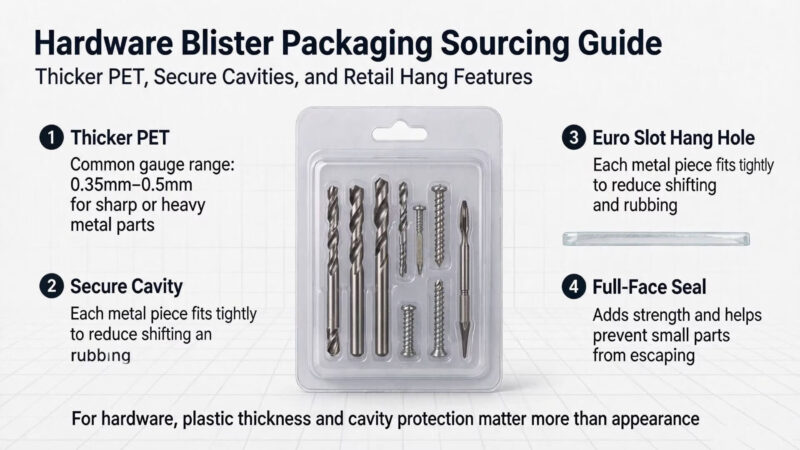
At XiMan Industrial, we build custom hardware blister packs paired with printed back cards. We adjust plastic thickness based on how sharp or heavy your hardware items are.
FAQ
What plastic thickness works best for hardware blisters?
Most common hardware uses 0.35mm–0.5mm PET. Heavier or sharp-edged tools need thicker stock.
Does hardware blister packaging always need a back card?
Not always, but sealed blister + back card is the most popular format for retail shelf sales.
Can you make multi-cavity blisters for sets of screws or bits?
Yes, custom multi-cavity molds keep separate hardware pieces organized in one pack.
Will sharp metal cut through the blister easily?
With proper gauge selection and cavity edge rounding, we can greatly reduce puncture risk.